Showing posts with label environment. Show all posts

Friday, June 1, 2018

Winner of 2018 Best Paper on Housing Prize Focuses on Philadelphia's Efforts to Address Climate Change and Affordable Housing

by David Luberoff,
Deputy Director
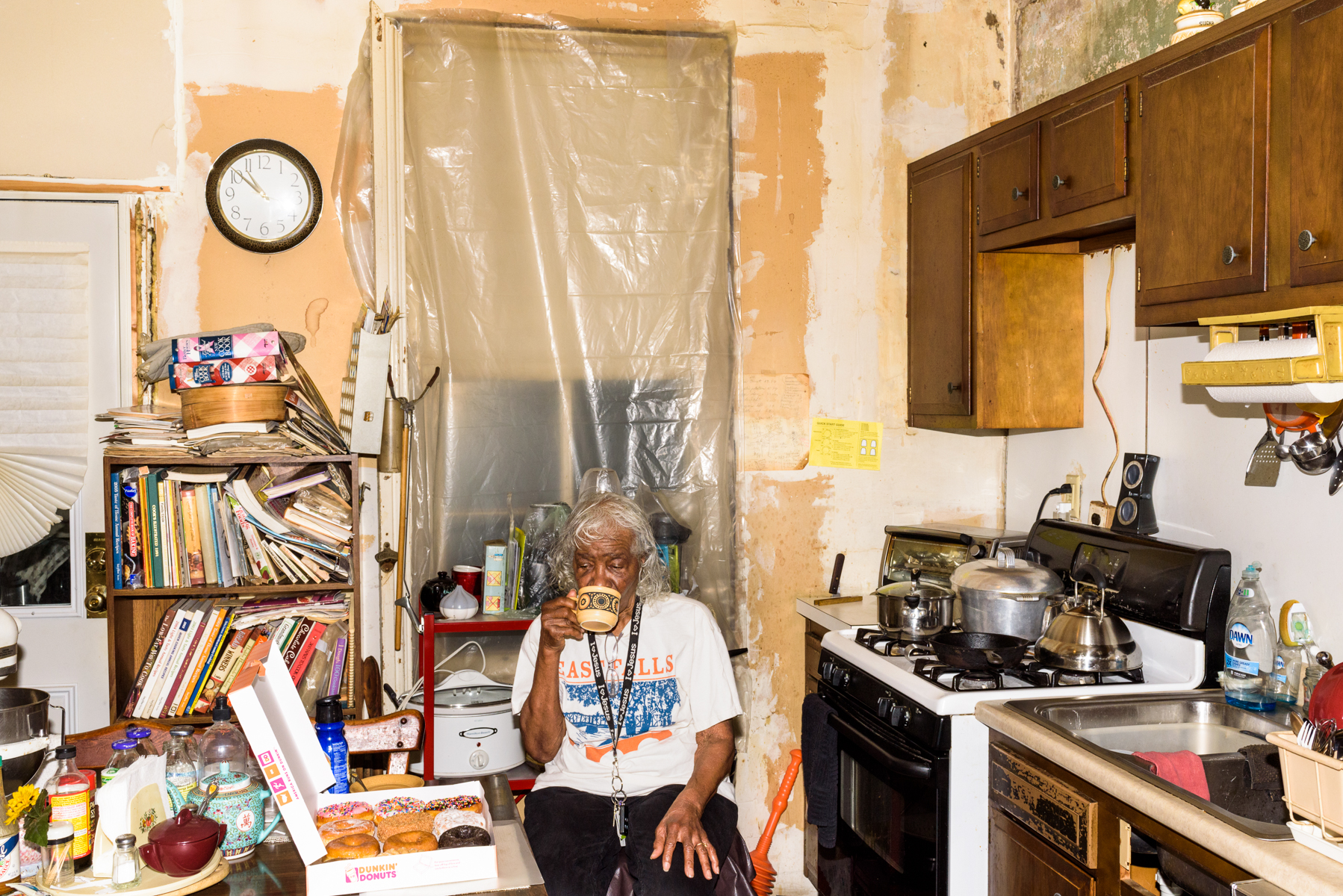
The Philadelphia Energy Campaign (PEC) is an unlikely success story of a municipal climate initiative prioritizing the needs of its marginalized residents by preserving affordable housing through energy policy, according to Caroline Lauer, a recent graduate of the Harvard Graduate School of Design, whose thesis on PEC received the 2018 Joint Center for Housing Studies Best Paper on Housing Prize.

In "A Pathway to Preservation? Planning Processes at The Intersection of Climate Change and Affordable Housing in Philadelphia, Pennsylvania", Lauer, who received a Master of Urban Planning, provides a detailed case study on PEC's history and goals, and links that history to literature on both planning and public policymaking.

Credit: Philadelphia Energy Authority/Jordan Baumgarten

PEC has an ambitious set of goals, writes Lauer. It aims to create jobs, strengthen communities, cut energy bills, and reduce Philadelphia's carbon footprint by leveraging $1 billion of public and private investment over ten years. This effort, she explains, is especially notable because, while cities across the United States have been actively planning for climate change for at least two decades, equity considerations, such as the impact of climate investments on disadvantaged communities, have often been overlooked or ignored when those plans have been prepared and implemented.

According to Lauer, the Philadelphia Energy Authority, which was created in 2010, became a notable exception largely because of the values and skills of Emily Schapira, who launched the PEC campaign not long after she became the authority's executive director in 2016. Lauer observes that, while the typical focal point of an energy initiative is the fastest or most efficient way to reduce energy consumption, the focus of the PEC has been the residents who will benefit the most from the energy reduction today. She adds that by "inextricably linking equity and energy, the PEC prioritizes the needs and interests of the many low-income and minority residents" in Philadelphia, which not only has the highest poverty rate of the ten largest American cities but has relatively old, poorly-maintained, energy-inefficient housing stock. Moreover, she notes that Philadelphia, a Democratic stronghold, has had to do much of this work without significant support from the state legislature, which was overwhelmingly Republican when the campaign got underway.

Succeeding in this complex milieu, she notes, has required skilled and committed leadership that not only is attuned to equity and energy issues but also is cognizant of, and responsive to, political considerations. Combining these approaches can be difficult, writes Lauer, who observes that "community development efforts to preserve affordable housing through energy efficiency are rare." However, she adds, "PEC demonstrates that merging both objectives into one program is a viable policy option."

Wednesday, March 14, 2018

Local Responses to Global Climate Change

by Jill Schmidt
Graduate Research
Assistant
From September’s destructive hurricanes to the devastating fires in California, recent natural disasters across the US have underscored the many ways in which climate change is affecting urban areas. Moreover, while these unpredictable disasters garner significant attention, climate change is also intensifying important long-range weather-related hazards such as heat waves, extreme precipitation, desertification, and loss of biodiversity.

Taken together, such effects – as well as the rollback of federal-level policies – can discourage and overwhelm those facing climate-change related impacts in their communities. However, as varied examples from Florida, the west coast, Boston, and Boulder show, many states and localities are taking meaningful steps to prepare for and perhaps even mitigate the effects of climate change at the municipal, neighborhood, and household levels.

Homes damaged by Hurricane Andrew, 1992 (Wikipedia)

September’s Hurricane Irma, for example, showed the positive impacts of successful efforts to update Florida’s building codes in the wake of Hurricane Andrew, which was the costliest natural disaster to affect the United States when it struck that state in 1992. After that disaster, many Florida residents pressed the state to update its building code (and for localities to enforce it). Two years later, the state approved a new building code focused on increasing the likelihood that buildings could resist hurricane-force winds by requiring such elements as shatterproof windows, fortified roofs, and reinforced concrete pillars. The code also requires that roofs be built of plywood and fastened with roofing nails (instead of less expensive but less resilient approaches that relied on particle board secured by staples).

While these provisions are supposed to ensure that structures can withstand winds of up to 111 miles per hour, Miami-Dade and Broward counties went even further by requiring that new buildings be able to withstand winds of at least 130 mph. (Moreover, as of January 2018, the codes for the two counties will also include new elevation minimums for new construction and substantial improvements to existing structures in flood hazard areas.) The strengthened requirements helped minimize damage from Hurricane Irma, according to Michael Finney, president and CEO of the Miami-Dade Beacon Council (the region’s official economic council). In an op-ed that appeared in the Miami Herald, he wrote: Most property and buildings escaped with little or no structural damage. The impact could have been much worse, were it not for the lessons learned and actions taken to fortify buildings and properties after Hurricane Andrew and subsequent storms.”

California wildfires, 2017 (Wikipedia)

In the western part of the United States, where wildfires are a significant threat,
Community Planning Assistance for Wildfire (CPAW) is helping communities take advantage of land-use planning to reduce the risk of damages from fires. CPAW is a partnership funded by the U.S. Forest Service and private foundations, and is run by Headwaters Economics and Wildfire Planning International. The organization focuses particularly on protecting the wildland-urban interface where human habitations are sparse but increasing numbers of built structures can serve as fuel that can help wildfires spread. Since its founding in 2015, CPAW has helped 18 cities and towns develop plans to limit fires and reduce property damage by creating “defensible spaces” – areas cleared of vegetation and other flammable materials as well as paths that firefighters can use to fight approaching fires.

Similiarly, in Boston, Neighborhood of Affordable Housing (NOAH), a community development corporation in the city’s East Boston neighborhood, used funding from the Kresge Foundation to launch ClimateCARE (Community Action for Resilience Through Engagement). The effort, which focuses on near-term needs related to energy efficiency, disaster emergency planning, and social resiliency is trying to help residents prepare and plan for the impacts of climate change, which could be significant because much of the neighborhood is built on landfill in Boston Harbor. One notable part of this effort is a “Basement Cleanup” program, which helps residents remove clutter, minimize the risk of toxic leaks, prevent safety and health threats, and safely store sentimental and important objects. Building in part on this work, the City of Boston announced last fall that it was taking steps to protect East Boston and nearby Charlestown from current and future flooding as a result of climate change.

A fourth notable example that addresses the mitigation of climate change is Boulder, which in 2007 became the first city in the nation to have a voter-approved tax dedicated to addressing climate change. The Climate Action Plan (CAP) tax is levied on electric bills. Rates vary for residential, commercial, and industrial users; the average annual tax is $21/year for residential users, $94 for commercial accounts, and $9,400 for industrial users. Although the revenue funds many programs, one program of note is EnergySmart, an energy-advising service and rebate program for residents who make energy efficiency investments. Over 9,700 households in Boulder have participated in EnergySmart since its inception in 2010. The City of Boulder estimates that it has avoided the release of more than 50,000 metric tons of emissions between 2007 to 2015 as a result of CAP-funded programs, which has allowed the community to hold emissions constant amid population and economic growth.

While these efforts are notable, they can be difficult to implement, costly, and, at times, controversial. For example, mitigation plans are critiqued for reducing greenhouse gas emissions in one region but offset by increased or stagnant emissions in another locality. Further, many local decision-makers are hesitant to invest in preparing for risks when they face immediate challenges with limited budgets. However, prevention is likely to be more cost-effective than re-building and mitigation and adaptation projects can help communities avoid the costs associated with natural hazard disasters and devastation. Mitigation and adaptation initiatives may also offer promising opportunities to create local jobs, support emerging industries, and help build more inclusive and resilient communities. Given the gridlock at the federal level, such local initiatives may continue to be at the cutting edge of climate-change policymaking in the US for some time to come.

Tuesday, April 12, 2016

Three Things We Need To Do To Develop a Healthy Housing Stock

Mariel Wolfson
2012 Meyer Fellow
Our new working paper explores healthy home concerns and behaviors among American homeowners and renters. We show that both groups are interested in improving the indoor environmental health of their homes, but face myriad challenges to doing so. Below, we highlight three important steps we can take toward improving the health of our housing stock.

1. Demonstrate and Respond to Consumer Demand

Healthy housing is becoming more than a niche market. Nearly one in four households in our survey had some concern about health-related issues in their homes, and more than 20% acknowledged uncertainty about whether their homes might contain health risks. Nearly half of American homeowners responding to our survey have some level of interest in healthy home issues. In fact, 60% had already taken action – even if minor – to create a healthier indoor environment at home.


Notes: Sample size is 529.  Households that expressed some basic level of healthy housing concern were asked, "Which general category(ies) best describes your concern about the impact of your home on your household’s health? "Source: JCHS tabulations of Healthy Home Owner Survey, The Farnsworth Group.


The leading concern among respondents was indoor air quality (IAQ). As outlined in our paper, the most important action we can take to improve residential IAQ is to reduce indoor emissions, including the pollution that comes from heating and cooking, as well as from chemicals that are off-gassed by our furnishings, carpets, paint, and the materials used in constructing our homes. It is therefore critical that both consumers and building professionals have more options for non-toxic/less-toxic materials and products.

In a recent example, Home Depot and Lowe’s announced that they would stop selling flooring containing phthalates, a category of chemicals believed to disrupt human hormones. This “retailer gatekeeping” is one way to start shifting away from hazardous products and toward safer ones. As consumer demand grows and is recognized, forward-thinking manufacturers, retailers, and service providers who make healthy building a priority will be in a strong position to serve this market What’s good for health and the environment will also be good for business.


Notes: Sample size is 465. Households that expressed some basic interest in ‘invisible’ healthy housing issues were asked, “Among the healthy home issues that concern your household, please select up to three of them that generate the most concern."
Source: JCHS tabulations of Healthy Home Owner Survey, The Farnsworth Group.

2. Demystify the Problem

One encouraging conclusion of our working paper is that both homeowners and renters are interested in making their homes healthier, especially by improving indoor air quality and water quality. However, these same consumers report that information – including a lack of time to research options – is an obstacle to taking action. They are suspicious of spurious environmental and health claims (“greenwashing”) and aren’t sure where to turn for trustworthy, science-based information on healthy home products and services.

This problem is amplified when the potential project – remediation, remodel or replacement – is costly in terms of money, time, and energy. A homeowner concerned about potential mold or unhealthy insulation might be just as worried and confused about whether remediating the problem can guarantee a healthier home or improve symptoms such as asthma or allergies.

Another dimension of this problem is the sheer volume and complexity of scientific information on indoor air and environmental quality. Cutting-edge research – including such topics such as indoor microbiomes and chemical interactions with moisture and UV light – is truly fascinating. However, it is not actionable for the average consumer.

Moreover, as interesting as research on emerging issues is, it is important that we not lose sight of older yet persistent healthy housing concerns that have affected our housing stock for generations. In fact, the Lumber Liquidators disaster of 2015 was due to high levels of formaldehyde, one of the first three major indoor air pollutants that were identified back in the 1970s, along with radon and combustion pollution from heating and cooking. These are still serious healthy housing issues, as is lead paint. The Lawrence Berkeley National Laboratory has been a leader in indoor air quality research since the 1970s and offers a wealth of resources (designed for the public) on these issues.

Both our survey and the American Housing Survey show that numerous Americans still face basic structural integrity/safety problems in their homes, including insufficient insulation/weatherization, inadequate heating/cooling, electrical and plumbing problems, and pests. More attention to solving basic problems like these would go a long way toward making our housing stock healthier (for example, by helping to reduce the infiltration of outdoor air pollution, particularly in neighborhoods located near highways, airports, or industries.) While increased attention to chemicals and emerging issues is a positive development, we don’t want to neglect these critical basic issues.


Notes: Sample size is 414. Households that expressed some basic intention to act on specific healthy housing projects were asked, “Among the following healthy home actions your household has taken, plans to undertake or would like to undertake, please indicate how the related health issue(s) and/or risks(s) came to your household’s attention.”
Source: JCHS tabulations of Healthy Home Owner Survey, The Farnsworth Group.


3. Educate and Train Professionals on Solutions

Ever since the oil crisis of the 1970s, demand for energy-efficient homes has grown and building professionals have responded accordingly. Now, the construction/homebuilding/remodeling industry should do the same for healthy home concerns. As discussed in Point #1 above, consumers want their homes to contain fewer toxic materials and have good indoor environmental quality overall, but they need trustworthy expertise, services and information from the industry. Because energy efficiency and indoor environmental/air quality are so intertwined, this creates a natural opportunity for knowledgeable contractors to help their clients integrate both energy and IAQ concerns into upgrade/remodeling projects.

Building professionals who have relevant expertise – which includes knowledge of healthier/non-toxic materials and practices – will have a distinct competitive advantage both with individual homeowners and owners of multifamily buildings. Our paper shows that renters want healthier options, just as they want “green” units.

Fortunately, there is a growing number of initiatives that work to help building professionals develop this expertise, such as Healthy Housing Solutions, which offers training courses, as well as the National Center for Healthy Housing, the Healthy Building Network, the Perkins and Will Transparency project , and the Green and Healthy Homes Initiative. The Department of Housing and Urban Development’s strategy for action is another valuable resource.

Going forward, we hope that a focus on these three areas might go a long way towards improving the nation’s housing stock and the experience of the housing consumer, while also improving the nation’s overall health.

--
Read the full paper at Challenges and Opportunities in Creating Healthy Homes: Helping Consumers Make Informed Decisions by Mariel Wolfson and Elizabeth La Jeunesse

Tuesday, January 19, 2016

Energy Consumption in the Residential Rental Sector, and Promoting Energy Efficiency

Elizabeth La Jeunesse
Research Analyst
With the recent release of our America’s Rental Housing report, as well as the landmark international agreement on climate change reached in Paris, we took the opportunity to revisit the question of how much energy is consumed by the residential rental sector, as well as to explore pathways to reducing energy usage by renter households. We will revisit this topic again with the release of the US Energy Information Administration (EIA)’s 2015 Residential Energy Consumption Survey (RECS). Meanwhile, here are a few facts about renters' energy usage, as well as ways renters' energy consumption can be reduced even further.

The residential housing sector has a sizable carbon foot­print, accounting for about 22 percent of national energy consumption and a similar share of energy-related domestic CO2 emis­sions (source: EIA website.). While the rental sector’s contribution to these emissions is smaller than the homeownership sector both in aggregate and on a per household basis, it nonetheless represents a sizeable share of residential energy consumption. According to results from the most recent Residential Energy Consumption Survey in 2009, renters were responsible for nearly a quarter of all residential energy use. On a per-household basis, renters living in single-family homes consumed 19 percent less energy than owner-occupants, while renters living in multifamily units consumed 29 per­cent less energy than owner-occupants. This lower energy use among renters reflects in part the smaller average size of rentals relative to owned units. However, while the 2015 RECS is not yet available, the updated data is likely to show higher ener­gy use by the rental sector because of increases in both the rentership rate and the share of single-family rentals.

The construction of new, more energy efficient units and loss or replacement of older units contribute to improvements in the energy efficiency of the rental stock over time. Based on our analysis of data from the 2009 RECS survey, we found that rentals built in the 2000s consumed 28 percent less energy on average than those built before 1980. Figure 1 below illustrates this trend, showing that newer single-family and multifamily rental units consume less energy compared to remaining, older units.


Figure 1
Note: Single-family excludes mobile homes.
Source: JCHS tabulations of US Energy Information Administration, 2009 Residential Energy Consumption Survey

However retrofits to existing units, especially those affecting the building envelope, windows/doors, appliances, and HVAC systems, also play an important role—and have more immediate impacts. As of 2009 the typical unit built before 1970 used nearly 25 percent less energy than same-age rentals in 1980. This substantial reduction in energy usage over time highlights the critical importance of retrofits to existing units for improving energy efficiency.

Figure 2
Note: Includes all structure types. Square footage includes all attached garages, all basements, and finished/heated/cooled attics.
Source: JCHS tabulations of US Energy Information Administration, 1980 and 2009 Residential Energy Consumption Surveys.

A variety of government and private initiatives currently target reductions in energy use in the rental housing sector. In particular, state and local building codes for energy efficiency provide a primary source of new regulations. These are influenced by changes in the International Energy Conservation Code (IECC), which continues to set higher standards for energy efficiency requirements in the building envelope, lighting, heating, and cooling. Federal appliance standards for equipment in residential/multifamily buildings are also tightening. Since 2009, fully 34 new or updated standards have been issued for products, estimated to cover 90 percent of residential energy use (source: US Dept. of Energy). Federal, state and local financial incentives, including tax deductions and credits, utility rebates and loan programs, also target reduced energy usage in rental properties.

In his research brief, "Reducing Energy Costs in Rental Housing," JCHS Senior Research Fellow  Michael Carliner highlights the pros and cons of these and other initiatives to reduce energy usage among renters. One emerging approach that bears particular promise is that of increasing access to energy usage information and related property performance data among renters and property owners. The idea is that greater transparency of energy cost information can incentivize renters and landlords alike to manage their energy consumption choices more efficiently, and to undertake cost-effective, energy saving investments. Energy usage data can even be ‘gamefied’ such that people voluntarily compete in the common effort to save energy—with real energy savings as a result (see ACEEE paper). For some examples of city-wide efforts to increase disclosure access to energy usage data, see Amy Morsh’s recent blog post at the Center for Climate and Energy Solutions.

While increasing access to information can help overcome market inefficiencies, major complications and trade-offs still remain in the quest to reduce renters’ energy consumption. With rental affordability challenges high and rising nationwide, one major question is whether property owners are passing the costs of energy-saving retrofits on to tenants. Structural feasibility is also a potential concern, since new appliance standards are not always compatible with what existing multifamily buildings can structurally accommodate in terms of HVAC sizing. Lastly, as discussed in the America’s Rental Housing report, efforts to improve the energy efficiency of the rental stock must also consider the location of rental housing units, which influences tenants’ travel options and transportation-related energy usage.

As the preceding discussion suggests, reducing renters' energy usage is a complex task with many possible ways forward, but also with many potential challenges and trade-offs. Ongoing and future efforts to improve the energy efficiency of the US rental stock ideally will take these complex factors into account, while balancing other critical policy objectives including rental housing affordability.


Wednesday, December 10, 2014

Survey: Many Homeowners Concerned about Invisible Health Risks

by Elizabeth La Jeunesse
Research Analyst
What makes a home healthy or unhealthy?  As Mariel Wolfson illustrated in her recent blog, this question is a multifaceted one. Old hazards persist, including lead paint, combustion pollution, formaldehyde, and radon. There is also growing awareness of other invisible pollutants, including volatile and semi-volatile organic compounds and endocrine disrupting chemicals. These elements enter homes not only through household products and goods but, as research from the Healthy Building Network shows, through building materials themselves. Achieving optimal ventilation remains essential to healthy indoor air quality. Attention should also be paid to the surrounding neighborhood, including access to health services and healthy food, walkability and accessibility, and levels of outdoor air pollution. Some communities are disproportionately affected by polluting industries and waste disposal sites in their neighborhoods, making it even more difficult for residents to enjoy a healthy home environment.

Households’ perceptions of health risks influence behaviors and in turn affect the home environment, so the Joint Center recently surveyed homeowners to learn about their ‘healthy housing’ concerns. These include but are not limited to worries about mold/moisture, indoor air quality, chemicals at home, and noise and lighting issues which might affect household health.

We found that roughly one out of four homeowners expressed some level of concern about an aspect of their home negatively impacting their household’s health. One out of ten households described their concerns as ‘moderate’ or ‘major’. High income households (earning $100K or more) were slightly more likely to express concern, as were households with one or more children.

By far the most frequently cited problem was indoor air quality, with more than two thirds of the concerned households identifying it as an issue. Water quality and harmful chemicals/materials followed, with around 30-40 percent of households citing them. As the chart below shows, these indoor health risks ranked even above basic safety issues. Least commonly cited problems were light and noise issues. 


Notes: Sample size is 529.  Households that expressed some basic level of healthy housing interest/concern were asked, “Which general category(ies) best describes your concern about the impact of your home on your household’s health?” Safety or comfort of the structure includes trip hazards, inadequate heating/cooling etc. Other basic safety issues include pests, lack of smoke detectors/locks/child safety features, etc.
Source: JCHS tabulations of Healthy Home Owner Survey, The Farnsworth Group.

When asked to be more specific about the source of their indoor air quality concerns, top issues cited by owners included managing household dust and/or pet dander, air pollution from indoor cooking/heating, and lack of sufficient ventilation. Over half of households concerned about residential indoor health risks identified these as problems. Just under half of those worried about indoor health cited chemicals from interior furnishings and from the building/structure itself as a source of concern.

Among all homeowners expressing concerns related to indoor health, more than half took at least one specific action to remediate their concern. Most frequent actions completed or planned in the near future included water filter installation, choice of paint with no or low airborne toxins, mold removal, and installation of room darkening curtains/shades. Less frequent actions included removal of asbestos and lead paint. 

Over the coming months, the Joint Center will analyze results from similar surveys of renter households, as well as of remodeling contractors, to better understand how healthy housing concerns and behaviors are playing out in the current residential remodeling market.

Sunday, September 21, 2014

Wild Frontiers of Healthy Housing Research: Microbes Among Us

by Elizabeth La Jeunesse
Research Analyst
Recently, the Joint Center has been researching what makes a healthy home.  As Mariel Wolfson pointed out in her recent blog, indoor air quality has been a major component of modern healthy home research dating back to the 1970s.  Radon, formaldehyde, and combustion pollution from cooking and heating are traditionally identified as key risks.  One emerging topic that has yet to be understood is how microbial communities living among us affect household health.  As it turns out, these microbiomes (diverse communities of bacteria and other microorganisms sharing space with humans) are not well understood, but have great potential to impact human health indoors.

Earlier this year, I had the opportunity to attend a symposium on Microbiomes of the Built Environment at the American Association for the Advancement of Science (AAAS).  With some astonishment, I discovered there are millions of microbial species on earth, and while some are pathogens that are linked to illness and diseases, the majority are beneficial for humans.  For example, microbes have the potential to educate our immune systems, produce vitamins, energy, anti-inflammatories, and even neurotransmitters.

The squeamish may wince, but the fact remains: humans live in a sea of indoor bacteria—at home, work and in other public spaces—many of which promote human health.  Indeed, a central theme of the conference was that people not only need to be protected from pathogens, but they also need to be exposed to diverse microbes, especially at a young age.


Further research is needed on this front.  The vast majority of these microbes have yet to be classified.  And scientists don’t yet understand what constitutes a ‘healthy’ microbiome in the built environment.  More research is also needed on how to design, properly maintain, and fix buildings to prevent or eliminate problematic microbial indoor communities.  Currently, the Alfred P. Sloan Foundation is investing millions of dollars into a Microbiology of the Built Environment Program to study these and many other questions.  While answers remain far off, I came away from the conference with several takeaways relevant to the residential housing sector:

1.     Building design and management both play a role in the transmission of microbial communities.  In any built environment, the rate and efficiency of air circulation and filtration, as well as disinfection by UV light, all impact transmission of microbiomes. Rooms in same air handling units have similar microbiomes.  Even the type of ventilation—mechanical versus natural—impacts the diversity and composition of microbial communities indoors.  All of this suggests a distant, future role for ‘bioinformed’ design and management of homes and other residential communities.

2.     Building materials, and even appliances and fixtures, impact growth of microbial communities.  Bamboo, for example, widely heralded as a cheap and rapidly renewable building product, also exhibits rapid oxidative aging, enabling mold to grow more rapidly once the wood has been aged for long periods.  Even showerhead design can impact the spread waterborne microbial communities.  Some high efficiency showerheads can put out a fine mist that enters deep into human lungs, the effects of which need to be examined further.  Additional research and understanding is undoubtedly needed on how a variety of materials, fixtures, and appliances impact indoor microbial communities.

3.     Water quality will remain a challenge.  Scientists know surprisingly little about our drinking water’s microbial composition. Additionally, while the quality of U.S. drinking water is exceptionally high by world standards, our water infrastructure is aging and “nearing the end of its useful life,” according to the American Society of Civil Engineers.  The cost for replacement may be as much as $1 trillion over the next several decades.  As concern for water sustainability increases, water may be sitting in pipes longer, which may promote the growth of bacteria.  A prominent example can be seen in the case of hands-free faucets that can pose risks in a hospital setting.

4.     While scientists still don’t understand what a ‘healthy’ indoor microbiome may be, some preliminary findings and suggestions were offered to promote indoor health.  Most prominently, dampness and mold are widely identified as known factors associated with asthma, eczema, and other related health problems under the umbrella of ‘sick building syndrome.’  As Dr. Mark Mendell explained at the conference, films of fungi or bacteria on air conditioning coils are likely responsible for many of these cases.  Identifying and removing extra building moisture, removing settled dust, and properly operating and maintaining HVAC systems were are all recommended for preventing and remediating sick building syndrome.  A helpful 2012 alert from the National Institute for Occupational Safety and Health (NIOSH) contains further guidelines.  In addition to protecting against pathogens, some epidemiological evidence suggests that having dogs at home may actually protect against asthma early in life by facilitating exposure to diverse microbes.

If and when scientists do eventually unravel the complex riddle of what constitutes a healthy indoor microbiome, further questions and challenges will remain.  How can healthy, bioinformed buildings be designed and maintained?   Perhaps an even greater challenge will be what to do from a policy perspective. Should architects, building scientists, and policy makers take steps to promote certain bacterial communities in buildings?   As Dr. Jeffery Seigel pointed out at the conference, public perception could be tricky—for instance, if people get sick inside a building designed to promote certain bacteria, they could assume it’s because of the particular microbiome in the building. 

Study of microbiomes in the built environment is a challenging and wild frontier in the realm of healthy housing research, but findings relevant to residential health likely will inform consumers’ future home improvement behaviors and spending.  Indeed, according to a recent Joint Center survey, one out of every four homeowners expressed concern about some aspect of their home negatively impacting their household’s health. And among owners specifically concerned about ‘invisible’ risks, such as indoor air or water quality, more than half took at least one specific action to remediate their concern, including installation of water filters, mold removal, and choice of paints with low- or no airborne toxins.  In other words, U.S. consumers’ perception of invisible health risks and problems, and their growing knowledge of best practices in healthy housing, impacts their home improvement behavior.  Further developments in healthy housing research likely will impact their choices of remodeling projects and materials, and may even influence how they go about choosing remodeling contractors who they feel will best protect and even promote their households’ health.

Wednesday, August 14, 2013

Beyond Energy Efficiency: The Future of Sustainability in the Housing Market

by Kermit Baker
Director, Remodeling
Futures Program
For the past 40 years, since the OPEC oil embargo in the early 1970s dramatically pushed up international crude oil prices, energy conservation and energy efficiency have been national economic and policy priorities. Households have directly borne the brunt of these higher prices. Since 1973, while overall consumer prices have increased fourfold, housing costs as measured by the consumer price index have moved up at the same pace, but home energy prices have jumped by half again as much; six times as high as they were in 1973.

In response to higher prices, households have reduced their home energy consumption. The initial reaction was to cut back on heating in the winter and air conditioning in the summer, but as energy costs remained high, households have made investments to improve the energy efficiency of their homes. (A recent blog post by Mariel Wolfson describes how early efforts to address energy efficiency gave rise to concerns about indoor air quality.)  More recently, state and federal tax incentives have encouraged even greater levels of home energy efficiency spending. Joint Center analysis indicates that almost a third of homeowner improvement spending at present is for projects where there is likely to be an improvement in energy efficiency, such as window replacements, adding insulation, or upgrading the HVAC system. This share is up from a quarter of spending a decade ago.


The results of these investments have been impressive: between 1980 (when households started thinking more seriously about investing in energy efficiency retrofits) and 2009 (the most recent national survey on energy consumption) per household energy consumption has declined almost 22%. Since home sizes have actually increased over this three decade period, the per square foot decline in home energy use has been an even more impressive 30%.

However, given changes in the domestic energy situation, the days of strong incentives from rising energy costs to improve home energy efficiency are likely behind us. While the controversy surrounding the environmental and health concerns of hydraulic fracturing have generated a lot of discussion, its impact on energy production generally has attracted less attention. For example, a 2012 report from the International Energy Agency predicts that the U.S. will become the largest global oil producer by around 2020, becoming self-sufficient in net energy terms later that decade and a net oil exporter by 2030. We’ve already seen the impact of this increased production on home energy costs: since 2008, overall home energy prices have remained stable, while natural gas prices for home energy use have declined by a third.

If rising and uncertain home energy prices drove the interest in energy efficiency investments, then the expected stable prices moving forward should remove many of these incentives. Where does that leave sustainability as a priority for homeowners? In fact, growing sensitivity to environmental concerns has created a lot of momentum behind energy efficiency as well as other sustainability concerns such as the use of renewable building materials and the use of recycled products in the homebuilding and home improvement process, water conservation and reuse, indoor air quality and healthy homes, home automation, and even renewable energy sources. Beyond the third of expenditures on energy efficiency measures noted above, Joint Center surveys of home improvement contractors have determined that somewhere between 20% and 25% of home improvement projects on a dollar basis have environmental sustainability other than energy efficiency as a stated goal of the project.

If consumer demand exists for increasing sustainability in housing, the likelihood is that the market will respond, and there is evidence that it is doing so. Entrepreneurs are developing new products in these areas. A recent Joint Center survey of home improvement contractors asked if they were seeing new products or technologies related to sustainability emerge in recent years, and if so, in which areas. Despite declining energy costs, energy efficiency and insulation techniques still topped the list, with about half of respondents indicating that they were installing or seriously considering installing new products or technologies in these market niches. However, also high on the list were products and technologies related to other sustainability objectives. As manufacturers figure out ways to produce them in a cost-effective manner, and contractors receive training and market their skills at installing these new products, interest in these areas is unlikely to diminish regardless of what happens to home energy prices.

Wednesday, July 24, 2013

Climate Change and Indoor Air Quality: Lessons from the Energy Crisis of the 1970s

by Mariel Wolfson
Meyer Fellow
Current discussions of climate change do not often focus on housing. Unless large numbers of homes are destroyed or damaged by extreme weather events such as hurricanes, tornadoes, or wildfires, we rarely scrutinize the effects of our warming planet on our homes. However, environmental health experts argue that this must change. In 2010, the US Environmental Protection Agency asked the Institute of Medicine to study the relationship between climate change and indoor environmental health. The Institute convened an expert committee of professionals from a range of fields, including earth sciences, public health, medicine, architecture, and engineering. Ultimately, they produced a thorough report - nearly 300 pages - arguing that climate change “may worsen existing indoor environmental problems and introduce new ones.” For example, extreme weather events and flooding could increase dampness and humidity, leading to mold growth and chemical emissions from decaying building materials. Or, extreme heat and cold could increase power outages, exposing already-vulnerable populations to dangerous temperatures or to carbon monoxide emissions from portable generators. Finally, well-intentioned attempts at energy conservation, such as weatherization, retrofitting, or excessively tight new construction, could reduce ventilation to dangerously low levels, exposing occupants to indoor air pollutants (radon, VOCs, and more).
           
This final example - tight, energy-efficient building - has an instructive history. The Arab Oil Embargo of 1973-1974, memorable to many Americans because of the gasoline shortages it caused, was a turning point in residential construction. Everyone from Sierra Club President Theodore Snyder, to President Gerald Ford, to energy expert Daniel Yergin endorsed residential energy conservation as a promising, if partial solution to America’s energy crisis. From rural homesteaders to large developers, American builders eagerly pursued energy-efficient housing designs. This was a time of great enthusiasm for underground and earth-sheltered homes, alternative power sources such as solar and wind, and other housing experiments. While some now seem outlandish, other innovations from this era are now standard, such as continuous polyethylene vapor barriers. If you’ve ever seen a half-built house cloaked in Tyvek Homewrap, this is an innovation that dates to the energy crisis of 1973-1974. The ideal of the nearly-airtight, highly energy-efficient house became increasingly attractive to builders and buyers alike; the lower a house’s “air changes per hour” (ACH), the more it could promise in energy and cost savings.


Above: a “zero energy” Habitat for Humanity house produced in collaboration with the National Renewable Energy Laboratory. Denver, Colorado. The home is tightly constructed, super insulated, and uses solar energy for space and water heating. It also has a mechanical ventilation system to conserve energy while preserving indoor air quality. Photo credit: National Renewable Energy Laboratory Image Gallery

As residential energy conservation became a political and popular priority by the mid-1970s, the Department of Energy funded the Lawrence Berkeley National Laboratory in Berkeley, California, to establish an energy-efficient buildings research program. Scientists studying residential energy efficiency began to investigate concentrations of indoor pollutants in these impressively-sealed homes. Focusing on nitrogen dioxide (a product of combustion from cooking and heating), formaldehyde (a common organic compound in building materials and furnishings), and radon (dependent more on the geology of a house’s site than the house itself), they found alarmingly high levels of indoor air pollution in some energy-efficient homes.

With these troubling findings as motivation, the Berkeley Lab pioneered scientific study of the complex relationship between residential energy efficiency and indoor air quality, and sought to balance these two necessities in cost-effective ways. In my recent working paper, I examine a crucial period in this history: during the early 1980s residential indoor air quality went from an obscure academic subject to a source of national anxiety. The Federal government, the popular media, and the public became increasingly concerned that America’s houses - especially its newly-popular energy-efficient ones - were full of insidious poisons. The media often oversimplified the situation by portraying energy-conservation as the enemy of healthy indoor air, when in reality the relationship between the two was complicated.


Above: Sources of Indoor Air Quality (IAQ) problems, Lawrence Berkeley National Laboratory, Indoor Environment Department. Conventional and energy efficient houses alike can contain harmful indoor air pollutants if not properly ventilated. Climate change is likely to exacerbate existing IAQ problems and introduce new ones. Photo credit: National Renewable Energy Laboratory Image Gallery

Knowledge of energy-efficient building, indoor air quality, and their relationship has increased exponentially since the energy crisis of 1973-1974. However, the continual proliferation of new building materials and household chemicals makes it difficult, if not impossible, for even the most ambitious indoor air experts to keep up. As the Institute of Medicine’s committee concluded, climate change adds even more variables to an already complicated set of equations.

The experience of the 1970s offers valuable lessons as we face the defining environmental problem of our time with an increasing sense of urgency. First, energy conservation in housing and other buildings is imperative, but can affect indoor environmental quality both negatively and positively. It might seem counterintuitive, but drafty old houses do not necessarily have better indoor air quality than tighter new ones: for example, well-insulated houses have the potential to burn less fossil fuel to maintain comfortable temperatures, thus releasing fewer combustion products and maintaining better indoor (and outdoor) air quality. Second, our homes are not isolated from the environments in which they are built: local, regional, and, increasingly, global conditions affect the longevity of housing and the quality of the indoor environment it envelops, which in turn affects the physical, mental, and financial health of occupants. Third, during the “environmental decade” of the 1970s, energy independence appealed to diverse sectors of American society for environmental, political, and financial reasons. This was a time of remarkable ingenuity in the residential energy sector. For example, the Federal government funded the Solar Energy Research Institute, the Department of Energy asked its National Laboratories to design energy-saving houses, major developers created conventional-looking homes that used thermal mass and solar power, and motivated Americans experimented with a variety of energy-saving strategies. Americans have a tradition of ingenuity in the face of energy crises, we have four decades worth of knowledge about indoor air quality and energy-efficient building, and we have a rapidly expanding knowledge of climate change. We can surely combine these advantages to ensure healthy homes on a healthy planet.